< >
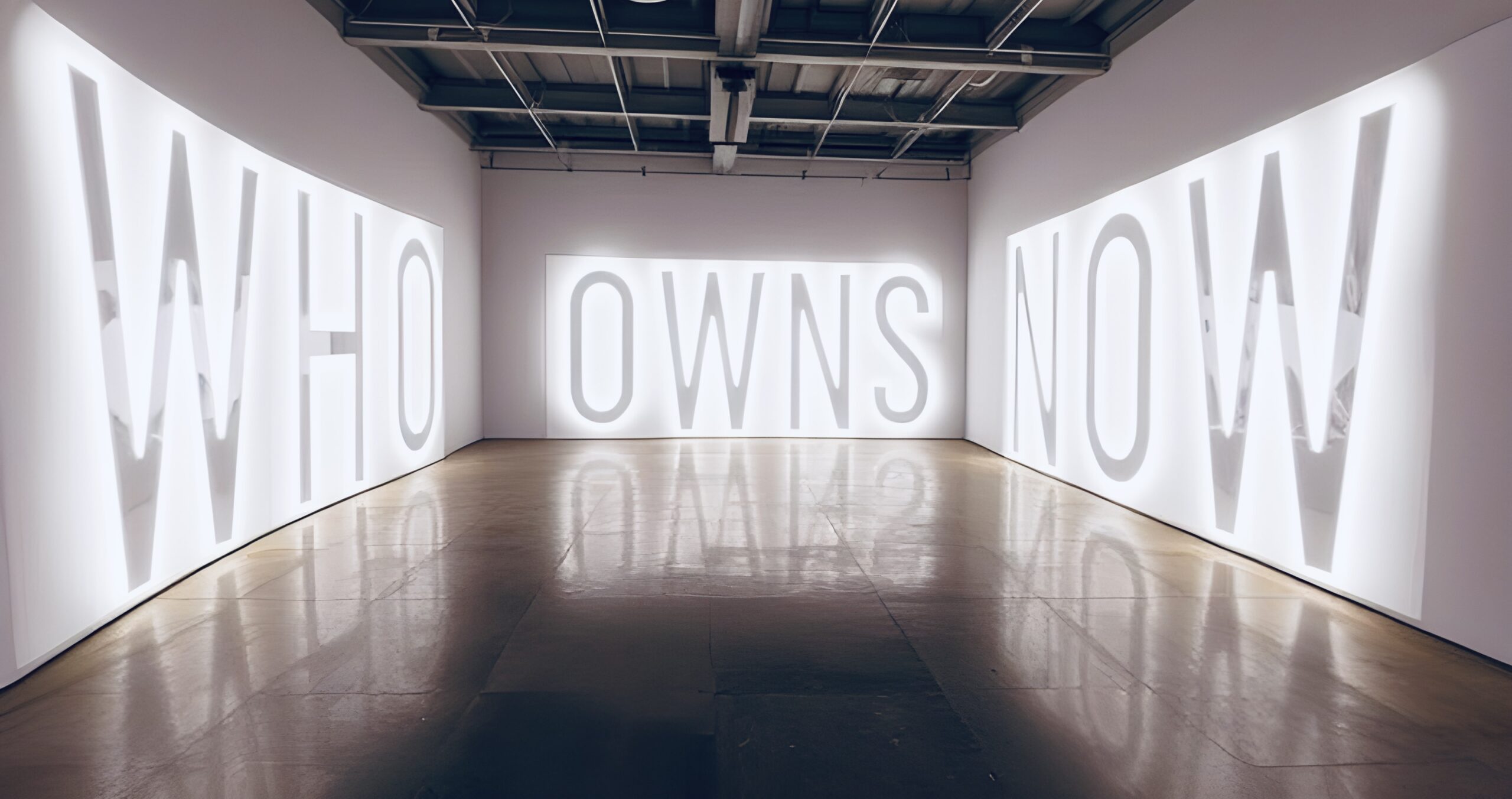
WHO OWNS NOW, 2025, AI generated image, Proposal for Installation, Globalodromia
WHO OWNS NOW
Philosophical Aspect: The Paradox of Possessing NOW
The Illusion of Ownership
To ask “Who owns now?” is to treat the present moment as a thing — a possession, a territory.
But can the Now be owned any more than a breath, a shadow, or a wave?Ownership presumes boundaries — but the Now is borderless.
It slips away as soon as it’s noticed. It resists capture.As philosopher Martin Heidegger might suggest: time (and especially the present) is not an object among others, but a mode of being. So: To try to own the Now is to misunderstand what Now is. It is not a thing — it is happening. Not a substance — but a process, a becoming.
Temporal Ego and Power
Yet humans constantly try to fix, define, and control the present — not only through clocks and calendars, but through identity, legacy, and narrative.
We want the Now to mean something, to serve our plans or stories.But if the Now is a flow, then ownership is delusion — a kind of temporal ego.
It’s the same ego that says:
“This is my time.”
“This moment belongs to me.”
“The future must follow my vision.”
Yet all of it collapses — because the Now cannot be fenced.
Presence vs. Possession
To be truly in the Now may require the opposite of ownership:
letting go, yielding, being-with rather than having.
That is the great tension: we want to possess what can only be lived.
Sociopolitical Aspect: Who Controls the Narrative of the Present?
Temporal Colonization
“Who owns now?” becomes political when we ask:
Who controls the present we live in?
Who gets to frame reality, define what matters, what happens, what is true? Historically, empires, religions, and institutions have fought not only for land — but for the interpretation of time: Who declares a new era? Who decides when something is over? Who claims that now is the time for action, silence, progress, war? Control over the Now is control over collective experience.
Media & Algorithmic Time
In digital capitalism, the Now has become commodified.
Social media platforms serve a curated “now” to each user — a feed shaped by algorithmic interests.
You don’t experience the real now — you consume a version of it.
Who owns that now? Not you. It’s owned by those who programmed the feed, who benefit from your engagement, who sell your attention. Your “now” is no longer lived — it is served to you.
Attention as Property
Attention is the frontline of modern politics.
To control what people are aware of now is to control what they believe, support, fear, ignore.
This makes the Now a contested space.
Governments, corporations, movements — all compete to own the present,
because whoever shapes the Now shapes what comes next.
“WHO OWNS NOW?” is not just a question. It’s an invitation to wake up inside the moment, and to ask: Whose “NOW” are we living in?
____________________________________________
“Since humans began to measure time, they also began to manipulate it.”
Time, in its raw form, is indifferent. It flows without interruption — a condition of existence, not of meaning. But the moment humans began to measure time — to divide it into days and hours, to assign it numbers and calendars — they did not merely observe time. They intervened.To measure something is to impose structure on it. And structure enables control.
Once time became quantified, it also became commodified:
Time became work hours, deadlines, schedules, age, eras, efficiency metrics. Civilizations rose around calendars, clocks, bells, and later, algorithms and timezones. Life was no longer just lived; it was timed. Thus began the manipulation:
We tried to save time, waste time, spend time, kill time.
We sought to own it and sell it.
We turned time into a currency — not just a flow but a force to be harnessed.
Even memory and expectation became tools of temporal manipulation:
The past was rewritten in narratives.
The future was pre-scripted by goals and predictions.
The now — perhaps the only real aspect of time — was sacrificed to past regrets or future anxieties.
So in measuring time, humans gained precision — but lost innocence.
What was once natural became strategic.
What was once lived became managed.