< >
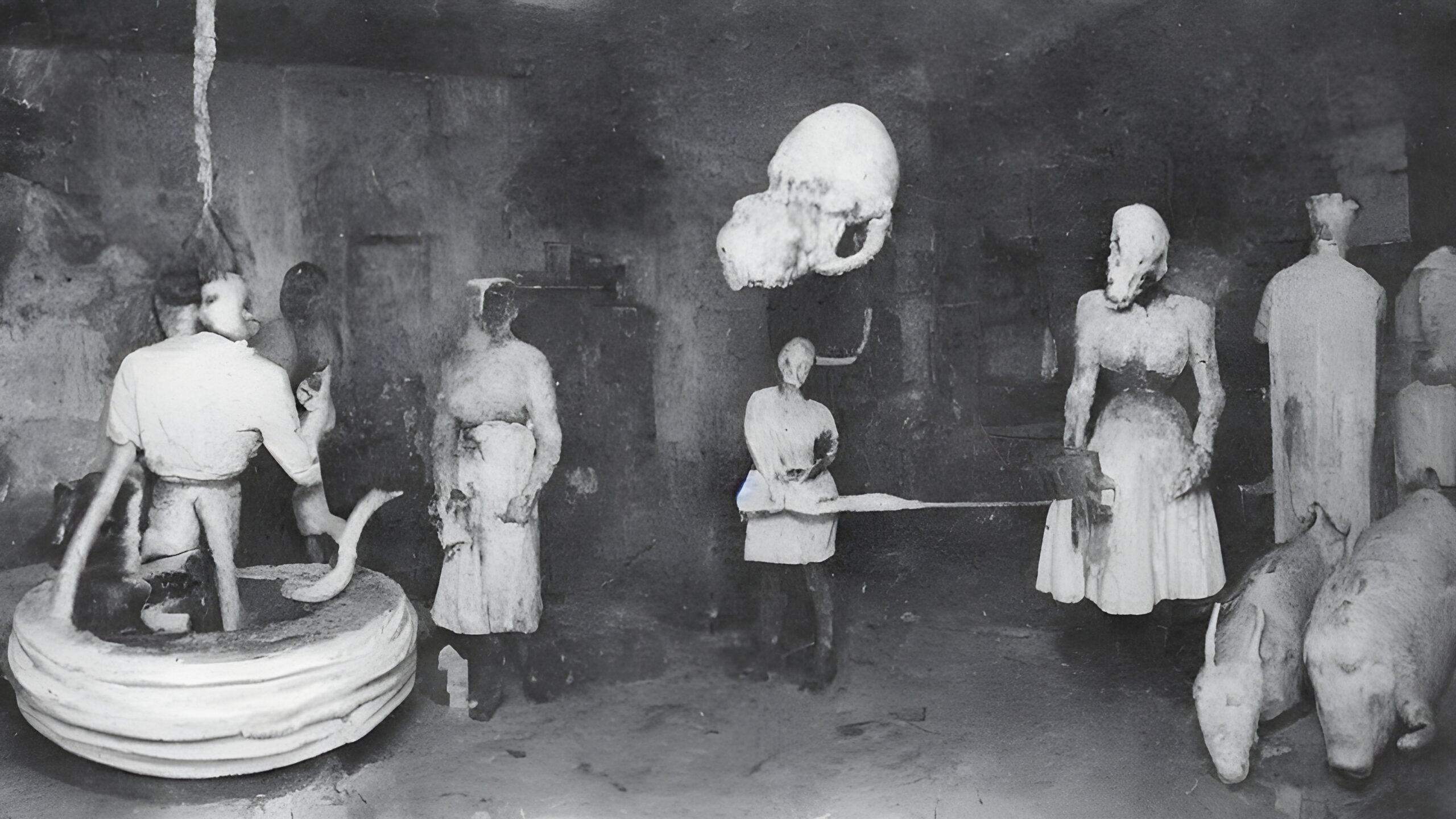
Speed, Standard, and the Unfinished, 2025
The series of AI D-generated Images engages not merely with the products of artificial intelligence but with its very thought process. The works were created within a model set to the standard configuration and the speed preference. Under these conditions, the images emerge rapidly and with reduced technical quality—an aspect that decisively shapes their aesthetic character. What might appear, in a conventional framework, as a limitation, here becomes the central conceptual feature: the low fidelity of the images makes visible the raw strata of algorithmic imagination.
The result is a constellation of unusual visual worlds that resemble less a finished artwork than fragments of an ongoing inner construction. They stand as liminal forms, as intermediate states between calculation and image, or as visual sediments deposited by a machinic imagination that renders its own generative process perceptible. This emphasis on the unfinished introduces a rupture with traditional notions of aesthetic completion.
It is precisely here that their quality resides: they resist the ideal of the definitive, perfected image and instead open up a view onto becoming, onto a not-yet. The viewer is confronted with a paradox—these are completed works that nonetheless stage themselves as incomplete, as if caught in perpetual transition. It is as if the AI were exposing the traces of its cognition—not the smooth product of perfected synthesis, but the sketch-like outlines of an instance that is at once calculating and dreaming.
From an art-theoretical perspective, these images can be understood within the framework of processual aesthetics: the work is no longer a fixed object but the trace of its own generation. In this sense, machinic production resonates with avant-garde strategies of the twentieth century, from the valorization of chance in Dada and Surrealism to the emphasis on openness and temporality in Process Art. Just as Marcel Duchamp’s readymades displaced artistic value from craft to concept, these AI-generated images displace value from the finished visual form to the generative act itself.
In this light, the AI D-generated Images not only extend the legacy of avant-garde experimentation but also mark a new aesthetic paradigm: one in which the machine’s thinking is not hidden behind the final product, but becomes the work itself.