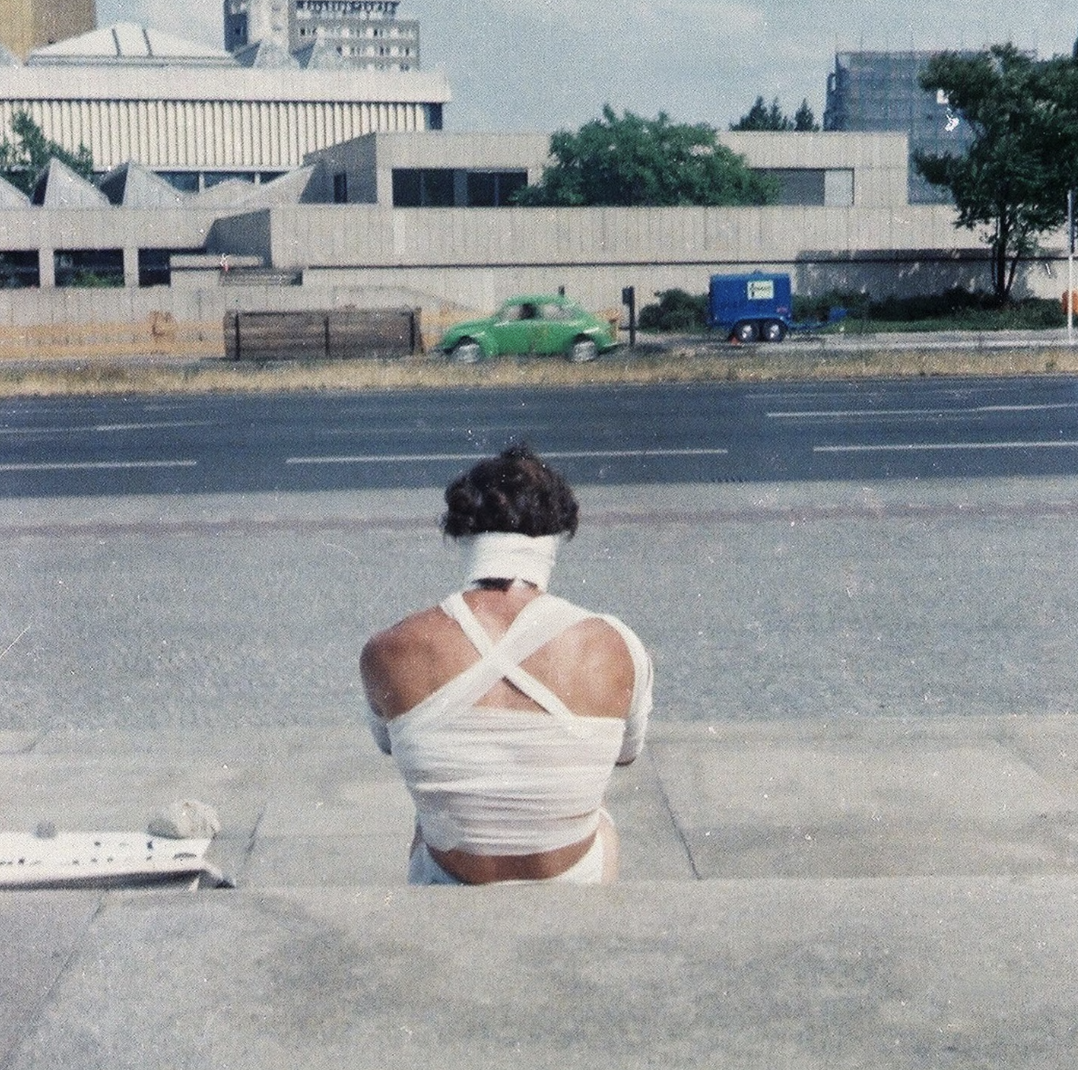
Don´t let happen Guernica in Kosova, 1992, Aktion,
Neue Nationalgalerie Berlin, Smmlerfamilie FILOART and Stunden Group
The components of the Performance / installation Don’t Let Happen Guernica in Kosova were deeply symbolic and profoundly impactful, blending visual art, performance, and political protest to confront the violence and humanitarian crisis unfolding in Kosovo during the early 1990s. Drawing on historical memory and collective trauma, the performance/installation served as a powerful act of artistic resistance.
At the heart of the performance/installation was a painting referencing Pablo Picasso’s iconic anti-war masterpiece Guernica, a universally recognized symbol of the devastating consequences of conflict. By echoing Picasso’s imagery, the work invited viewers to draw parallels between the bombing of the Spanish town of Guernica in 1937 and the atrocities occurring in Kosovo. The painting lent a powerful visual dimension to the action, awakening collective memory and urging reflection on the cyclical nature of violence and the need to prevent history from repeating itself.
Reinforcing the international message of solidarity, a poster accompanied the work, displayed in four languages. This multilingual approach underscored the global relevance of the appeal and emphasized that the tragedy in Kosovo was not a remote or isolated event, but a humanitarian issue demanding global awareness and response.
A particularly haunting element of the performance/installation was the continuous presence of a person wrapped entirely in white bandages, seated next to the artwork. The figure, resembling a mummy, was a living symbol of vulnerability, trauma, and the silenced pain of civilians caught in the chaos of war. Their anonymous, faceless form evoked the dehumanization and invisibility often experienced by victims of conflict. The white bandages—covering the entire body and head—suggested both physical and emotional wounds, as well as mourning and helplessness.
This performance element was meticulously planned and sustained over two days in August 1992, from dawn until dusk. The action took place outdoors, creating a stark contrast between the stillness of the figure and the passing rhythm of daily life. At all times, one person sat silently next to the work. These participants, from the Sammlerfamilie FILOART and groups of committed students, took turns embodying this role. During their shift, each person remained completely still, refraining from eating, drinking, or speaking, until they were quietly replaced by the next volunteer. The endurance and discipline required for the performance heightened its emotional gravity and gave the action a ritualistic, almost sacred quality.
Don’t Let Happen Guernica in Kosova was not merely an art performance/installation—it was an act of collective witness. Through its use of powerful imagery, multilingual communication, and bodily presence, the performance/installation demanded attention and empathy, while asserting the essential human right to peace, dignity, and visibility. It stands as a poignant reminder of art’s ability to confront injustice and mobilize conscience.
_____________________________________________
The kindness and openness of the director of the Neue Nationalgalerie in Berlin, Mr. Dieter Honisch, allowed the action to take place in a this special location. The staircase of the gallery, a symbolic space of public discourse, provided an ideal setting for the presentation of the project. Without any bureaucracy, he invited us to his office and gave us the opportunity to explain the concept of the performance/installation. After our conversation, he welcomed the idea and expressed his pleasure with what we were planning to do.
_____________________________________________
The fortuitous temporal overlap with the exhibition “Picasso – The Time after Guernica 1937–1973″ at the Neue Nationalgalerie in December 1992 adds an additional symbolic dimension to this event. Several months later, the Picasso exhibition was officially opened at the Neue Nationalgalerie, further underscoring the connection between historical art and contemporary political activity.
_______________________________________________
Special thanks to:
Dieter Honisch, Helga Köppe, Surur Bulluti, Marem Gurgule, Skender Isaja, Ajret Gurgule, Shaban Shpendi